The Hashemite Kingdom of Jordan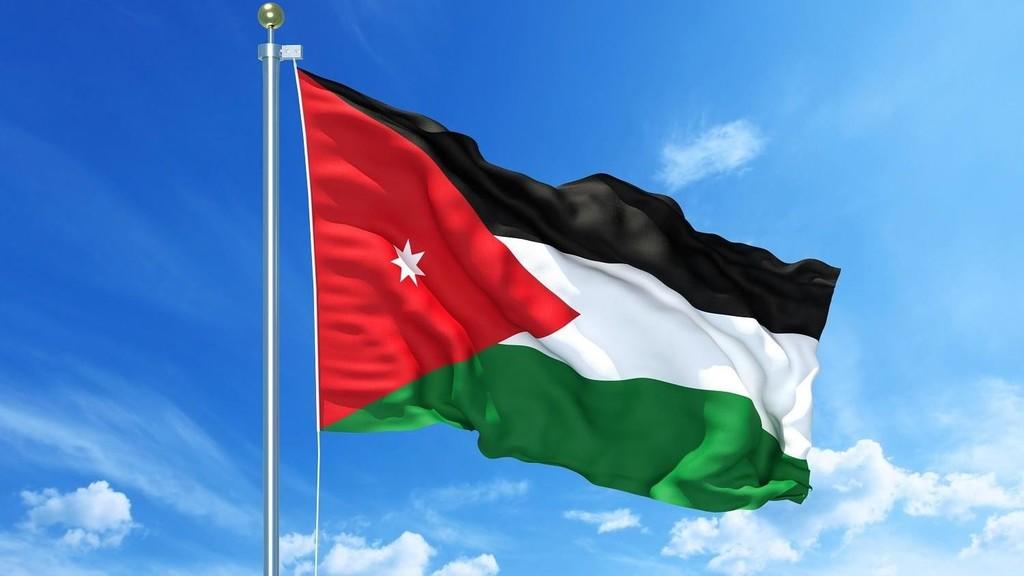
Overview
The Hashemite Kingdom of Jordan is an Arab and Muslim country located in Western Asia, to the north of the Arabian Peninsula. It is bordered by Syria to the north, Iraq to the east, Saudi Arabia to the south and southeast, and Palestine to the west. The Kingdom derives its name from the Jordan River, which forms part of its western border. Amman is the capital and largest city of Jordan.
Official Language
Arabic is the official language of the Hashemite Kingdom of Jordan, while English is the primary foreign language and is widely used in business, education, government, and international communication.
Political System
Jordan is a hereditary constitutional monarchy. His Majesty King Abdullah II Ibn Al Hussein is the Head of State and the Supreme Commander of the Jordan Armed Forces. The Kingdom operates under a parliamentary constitutional system based on the separation of legislative, executive, and judicial powers, in accordance with the Constitution and the rule of law.
National Flag
The Jordanian flag traces its origins to the flag of the Great Arab Revolt of 1916, from which it was derived. The black, white, and green horizontal stripes represent the Abbasid, Umayyad, and Fatimid dynasties, while the red triangle symbolizes the Hashemite leadership of the Great Arab Revolt. The white seven-pointed star at the center of the triangle represents the seven verses of Al-Fatihah, the opening chapter of the Holy Quran, and symbolizes unity, faith, and the aspirations of the Arab nation.
Population
According to the latest estimates issued by the Department of Statistics, Jordan's population was approximately 11.9 million at the end of 2025.
Arabs constitute the overwhelming majority of the population, alongside recognized ethnic communities, including Circassians, Chechens, and Armenians. The majority of the population is concentrated in the central and northern regions of the Kingdom, particularly in the governorates of Amman, Zarqa, and Irbid.
Islam is the official religion of the State, with the majority of the population being Sunni Muslims. Christian communities form an integral part of Jordanian society and contribute to the Kingdom's rich cultural and religious diversity. Jordan is internationally recognized for promoting religious coexistence, moderation, and mutual respect among followers of different faiths.
Area and Geography
The Hashemite Kingdom of Jordan covers a total area of 92,300 square kilometres, of which 91,971 square kilometres are land and 329 square kilometres are water.
Jordan's total land borders extend approximately 1,635 kilometres, including 744 kilometres with Saudi Arabia, 375 kilometres with Syria, 181 kilometres with Iraq, 238 kilometres along the 1948 Green Line, and 97 kilometres with the West Bank. The Kingdom also has a 26-kilometre coastline along the Gulf of Aqaba, providing its only access to the Red Sea through the city of Aqaba.
The Dead Sea, located approximately 430 metres below sea level, is the lowest point on Earth, while Jabal Umm ad Dami, rising to 1,854 meters, is the highest mountain in Jordan.
Jordan enjoys a predominantly Mediterranean climate in its northwestern highlands, characterized by warm, dry summers and cool, rainy winters. The eastern and southern regions are generally arid to semi-arid, with desert conditions prevailing across much of the country.
Official Currency
The official currency of the Hashemite Kingdom of Jordan is the Jordanian Dinar (JOD), which is divided into 1,000 fils or 100 piastres (qirsh).
Banknotes are issued in denominations of 50, 20, 10, 5, and 1 Jordanian Dinar, while coins are issued in denominations of ½ Dinar, ¼ Dinar, 100 fils, 50 fils, 25 fils, 10 fils, and 5 fils.